History of Docwra’s Manor
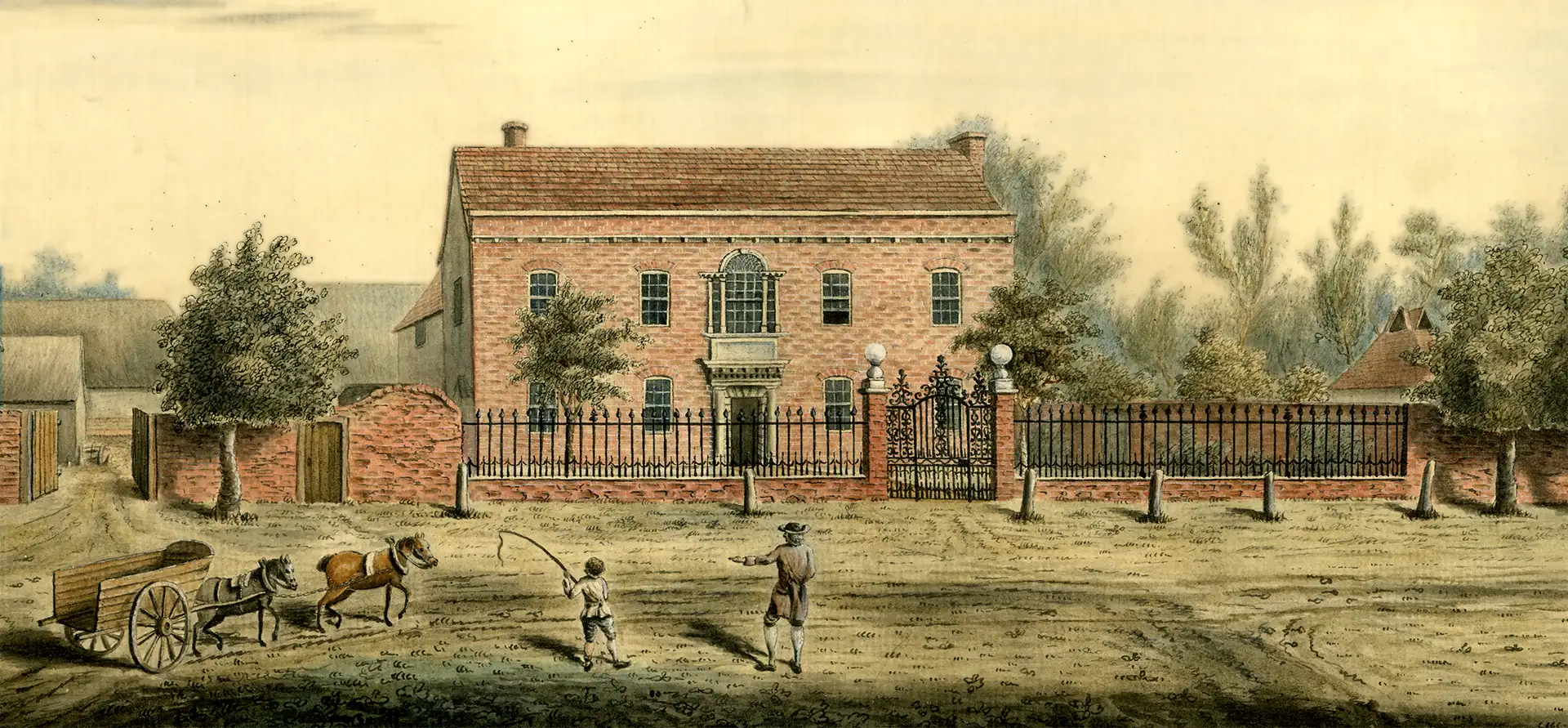
Docwra’s Manor features a facade and wrought iron gates added in the 18th century to a building that may date from the 15th-century agricultural revival following the Black Death. The present kitchen wing was originally a floored barn of three bays, similar to the barn on the Meldreth Road frontage; both may have been used for storing wool.
The main body of the house is 17th century, with alterations made in the 19th and 20th centuries, succeeding the more major ones of the 18th. It served as the centre of a working farm until 1919, when the ownership of the land and house was separated. The land was let by Cambridgeshire County Council as smallholdings. When the council built new farmsteads in the 1960s, the old barns were reunited with the Manor. Four houses were built for letting and sale, and the rest of the area was redesigned as courtyard gardens.
In the Middle Ages, Shepreth proved a good resting point for livestock moving north over the bridge across the river Rhee, a southern tributary of the Cam, to the Cambridge market. The name Shepreth means ‘the brook in which sheep are washed’ and it is mentioned in the Domesday Book. The Manor, which also features in 11th-century records, takes its name from a family of Docker Hall in Kendall, Cumbria, which settled some of its members near the lucrative wool trade of the Stourbridge Fair in Cambridge. Their connections were mainly in Lilley, North Hertfordshire, and in East Hatley, Cambridgeshire, where an illustrated brass rubbing commemorates one of them. In 1548, a John Docwra married into the family that owned Shepreth Manor, but this Docwra connection lasted only a few years; there is no firm evidence of whether the name dates from this time.
Faith Raven and her husband John purchased the house with 1.5 acres when they married in 1954; another acre has been added since. John brought experience of college gardening and a passionate interest in wild British flora. Faith had previously gardened on a roof in Mayfair and on a rocky prominence in a wild woodland in the Highland Region of Scotland. (see www.ardtornish.co.uk).